
Learning how to remove pilling from clothes starts with identifying the fabric and choosing the least aggressive method. Small fuzzy balls form when loose fibers tangle together, often where clothing rubs against itself or another surface. With patience, you can reduce visible pills on many sturdy knits. Delicate, loosely woven, or valuable garments need extra caution.
Ask about a garment assessment
Why do clothes pill?
Pilling is a surface change caused by friction. Fibers loosen, become entangled, and gather into little balls on the fabric. Sleeves, underarms, sides, cuffs, and areas under straps may pill more because they experience repeated rubbing. Washing and wearing can contribute, but some fabrics and constructions show pills more readily than others.
Pilling does not automatically mean a garment is poorly made, and removing pills does not restore fabric that has worn thin. Treat it as surface grooming, not a repair. If the material is already damaged, pulling or shaving at it can make the weak area worse.
Check the fabric before you start
Read the care label and look closely at the surface. A dense, sturdy sweater is usually a better candidate for gentle de-pilling than a loose knit, fuzzy finish, open weave, or fabric with loops. Take particular care with cashmere, fine wool, silk blends, lace, embroidery, sequins, and garments with raised or textured designs. The tool can catch on details or cut fibers that are meant to stand up.
Test your chosen method on a small, hidden area first. Work on a clean, dry garment unless the tool’s instructions say otherwise. Lay it flat on a stable surface with good light. Do not stretch the fabric tight; support it so the tool moves over a smooth area without dragging the garment. If you are uncertain about a specialty garment, review Dryeco’s garment-care services and contact the cleaner to discuss the item before trying a tool.
Choose a gentle method
Start with a lint roller
For loose surface fuzz and a few small pills, roll a lint roller lightly over the garment. It is a low-effort first step, but it may not remove pills that are firmly attached. Avoid pressing hard or repeatedly passing over a delicate area.
Use a fabric comb on suitable knits
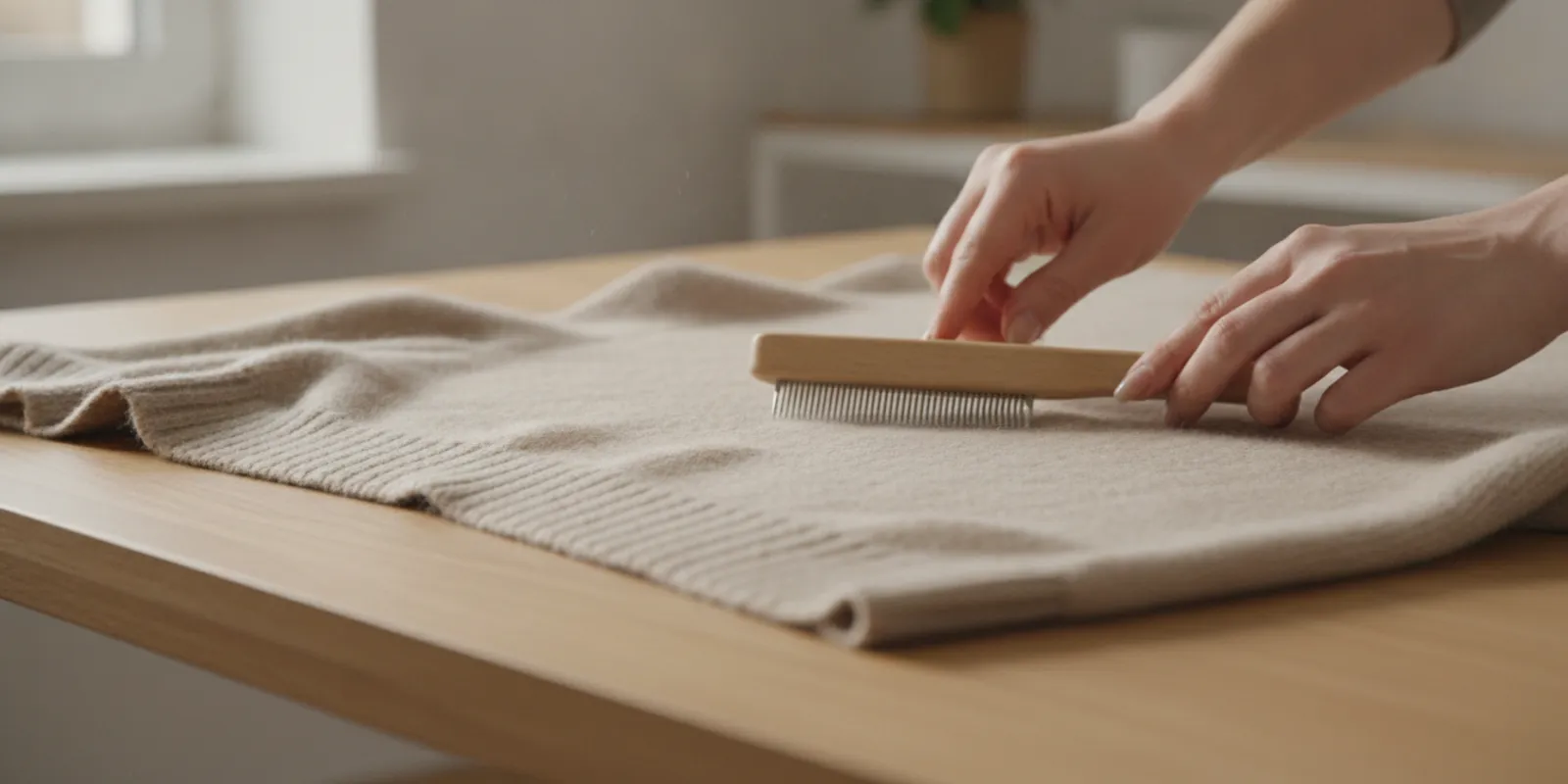
A fabric comb can lift pills from some dense sweaters. Hold the garment steady and draw the comb gently across a small section in one direction, following the tool’s instructions. Use light pressure. Stop if the comb snags, pulls loops, or changes the surface. Clear the removed fibers from the comb as you work so you can see how the fabric is responding.
Use an electric fabric shaver carefully
A fabric shaver can work on suitable, flat surfaces, but its blade can cut fabric as well as pills. Make sure the guard and cutting head are clean and intact. Keep the garment flat, use light pressure, and move the device smoothly without lingering in one spot. Keep it away from seams, buttons, zippers, embellishments, and loose threads. Never use it on a garment that the device instructions exclude.
Trim isolated pills only when safe
For a few clearly raised pills on a sturdy fabric, small scissors may offer control. Lift each pill away from the surface without pulling the garment, then snip only the pill. Keep the blades parallel to the fabric and well clear of the underlying yarn. Do not try this on a loose knit or an area where you cannot distinguish the pill from a garment fiber.
Remove pills in short, careful passes
- Inspect first. Check for holes, thinning, loose threads, snags, and decorative details. Do not groom over a damaged area.
- Prepare a flat surface. Smooth the garment without stretching it. Work in bright light so you can see the knit and the tool’s path.
- Test discreetly. Use the gentlest suitable method on an inconspicuous patch. Look for pulled fibers or a change in texture before continuing.
- Work a small section. Make short, light passes in one direction. Let the tool do the work instead of pressing down.
- Pause and inspect. Remove loosened pills, then check the surface. Stop as soon as the visible pills are reduced or if the fabric starts to look fuzzy, thin, or uneven.
Do not pull pills off with your fingers. Pulling can draw out the yarn and create a snag or weak spot. Avoid scraping with a razor, rough sponge, or other improvised blade: these can cut fibers or leave an uneven surface. A tool that works on one sweater may not suit another, even if both look similar.
When should you leave the garment alone?
Stop and seek advice if the fabric is very fine, loosely constructed, heavily textured, embellished, already snagged, or particularly valuable. The same applies if a test pass causes fuzzing, catches a loop, or changes the fabric’s appearance. Wedding, designer, couture, and sentimental garments may warrant a professional item assessment rather than home experimentation.
Professional care cannot promise that every pill can be removed or that a worn garment can be returned to its original condition. Describe the material and the problem, and ask what handling is appropriate before approving treatment. If you want to arrange collection, check the details on Dryeco’s free-pickup request page; confirm that your address is eligible and ask about the item before scheduling.
Call Dryeco to discuss a delicate garment
How can you reduce future pilling?
Reduce unnecessary rubbing during wear and laundering. Turn garments inside out when appropriate, fasten zippers and hooks that might catch, and avoid crowding the washer. Follow the care label, choose a gentler cycle when suitable, and avoid washing delicate pieces with rough items such as garments with abrasive trim. The Kansas State University Extension laundering guide recommends shorter wash periods and slower speeds when fabric abrasion could cause pilling: read the laundering guide.
Handle each garment according to its care instructions; there is no single wash setting that suits every fabric. Let items dry as directed, and avoid rubbing or twisting a wet knit. Put away clean clothing in a way that prevents it from being crushed against rough surfaces. These steps may limit friction, but they cannot guarantee that a garment will never pill.
For additional context on cautious removal methods, see Stanford’s guide to removing pilling from clothes. Its practical point is worth keeping in mind: the right approach depends on the fabric, so choose carefully and stop if the surface is at risk.
Keep the goal modest
Removing pilling is a careful surface touch-up, not a way to reverse wear. Start with the least aggressive option, test in a hidden place, and use short, gentle passes on fabric that can tolerate them. When the garment is delicate, valuable, or already damaged, pause and ask for an assessment before trying a stronger tool.
For more garment-care guides, browse Dryeco’s News & Updates.
