
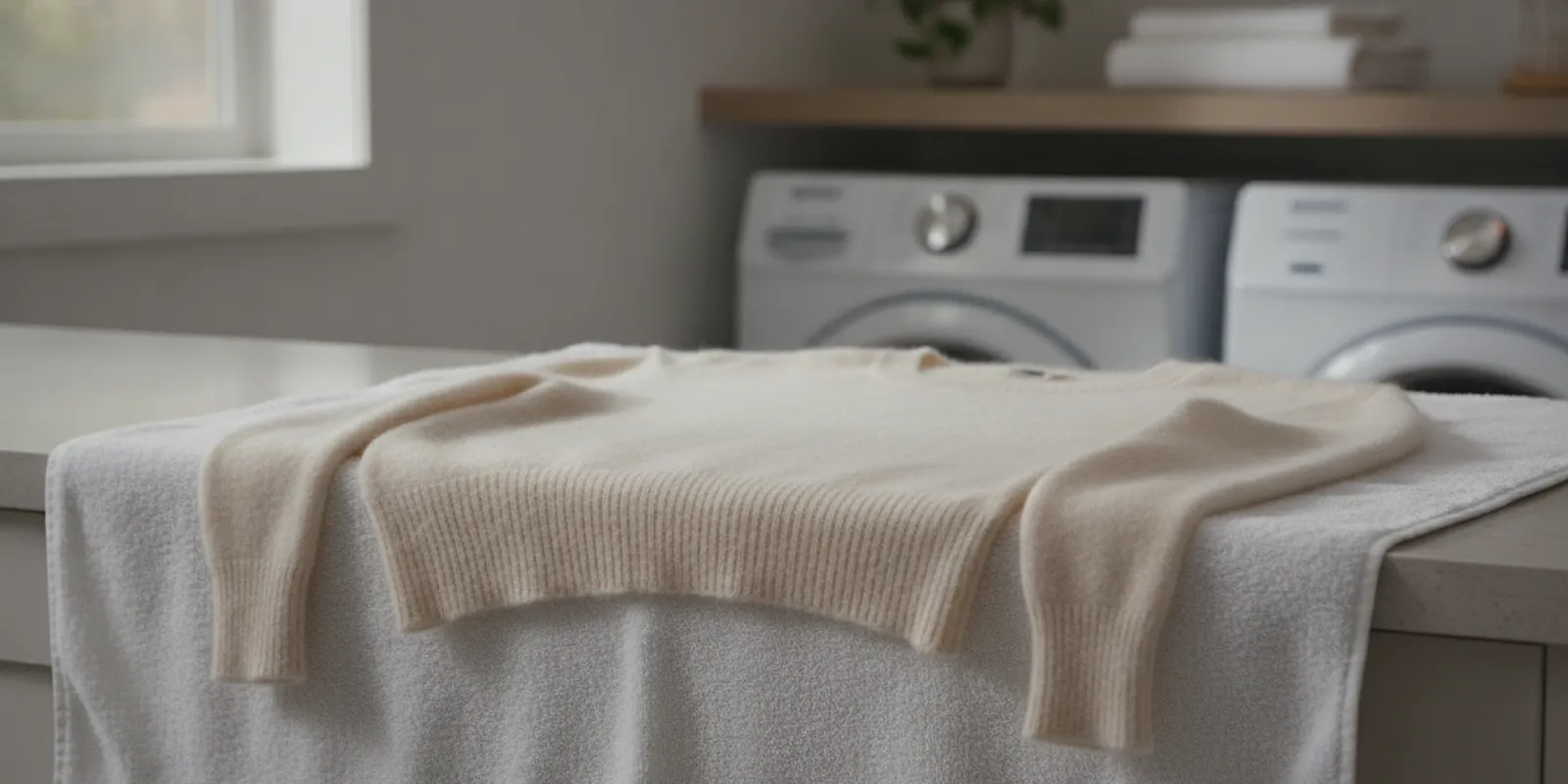
Knowing how to wash cashmere starts with one rule: follow the garment’s care label before choosing a method. Some cashmere items may be suitable for careful hand-washing, while others call for professional cleaning or special handling. When the label allows washing, a gentle process can help limit stretching, felting, and loss of shape.
For a cashmere assessment, contact Dryeco through the verified contact page.
Check the label and the garment first
Read the entire care label, including any symbols and instructions for drying. If it says “dry clean only,” do not assume that a home wash is safe. If the label is missing, unclear, or has conflicting instructions, pause and ask a garment-care professional before wetting the item.
Look over the sweater for loose seams, thin areas, snags, pilling, or stains. Note any embellishments, leather trim, linings, or contrasting colors. These details can change how an item should be handled. Avoid rubbing a stain or applying a household stain remover before checking whether the fabric and dye can tolerate it. If you find a stain, identify what caused it if you know, and tell the care professional rather than trying several products in sequence.
Cashmere garments can differ in construction and finishing. Textile research discusses wash fastness and elastic recovery as relevant fabric properties, including in work that addresses cashmere and other delicate materials. That is one reason not to treat every sweater as if it will respond the same way to water and handling. The research is not a care instruction for your particular garment; its label and condition are the practical starting points.
What do you need for hand-washing?
If the label permits hand-washing, gather a clean basin, cool water, a detergent made for wool or other delicate fibers, and a clean, absorbent towel. Use only a small amount of detergent according to its directions. Avoid bleach, fabric softener, and strong stain treatments unless the garment label or a qualified care professional specifically recommends them.
Prepare a clean, flat drying area before you begin. Cashmere is more vulnerable to stretching when wet, so you want to move it as little as possible after washing. Keep the water cool rather than warm or hot. Sudden temperature changes and vigorous agitation can increase the risk of distortion or felting. Clear enough space to lay the sweater flat without folding it over a narrow edge.
Before washing, consider whether the benefit is worth the risk. A lightly worn garment may need airing rather than a full wash, while a visible stain or odor may need a different approach. Follow the care label and the garment’s actual condition rather than washing it automatically after every wear.
How to Wash Cashmere by Hand
- Fill a basin with cool water. Add a small amount of the recommended delicate-fiber detergent and mix it into the water before adding the garment.
- Turn the garment inside out. Lower it into the water and let it become fully wet. Do not bunch it up or force it under with twisting motions.
- Press gently through the water. Use light, repeated presses to move the soapy water through the knit. Do not scrub, rub, wring, or stretch the sweater. Let it soak only as directed by the detergent or garment label; do not leave it unattended for a long period.
- Rinse carefully. Drain the basin and refill it with clean, cool water. Press the garment gently to release detergent. Repeat with fresh water if needed; do not hold the sweater under a forceful running tap.
- Support it as you lift. Gather the garment in both hands so its wet weight does not pull on one area. Avoid twisting to remove water.
If the water becomes strongly colored, the garment changes shape, or you notice a loose seam or other damage, stop. Further washing or rubbing may make the problem worse. A specialist can assess the item and discuss suitable care options. Do not try to correct a change in shape by pulling hard on the wet knit.
How to Wash Cashmere and Dry It Safely
Lay the wet garment on a clean towel and roll the towel loosely to absorb excess water. Press the roll gently; do not wring it. Unroll the towel, transfer the garment to a fresh dry towel or mesh surface, and reshape it to its original dimensions while it is still damp. Use the garment’s seams and edges as guides, and avoid stretching sleeves or the neckline.
Let the sweater air-dry flat in a well-ventilated place, away from direct sunlight and heat. Do not hang it on a hanger while wet, because gravity can stretch the shoulders and body. Avoid a tumble dryer unless the care label explicitly permits it. Turn the garment over or replace the towel if needed, keeping it flat until it is completely dry. Drying may take time; do not speed it up with a heater or hair dryer.
Once dry, fold the sweater for storage rather than hanging it. Make sure it is fully dry before putting it away. If you see a new mark, an unexpected change in shape, or persistent odor, do not try increasingly harsh treatments at home. Keep it separate from clean garments until you decide on the next step.
When is professional care the safer choice?
Choose an assessment instead of experimenting when the label says dry clean only, the garment is valuable or sentimental, the knit is especially delicate, or it has multiple materials, lining, embellishments, or a difficult stain. Professional care is also worth considering if you are unsure whether the color may run or the item has already stretched, shrunk, or become misshapen.
Dryeco serves South Florida customers with garment care and specialist handling. The appropriate process depends on the item and its condition, so ask for an assessment rather than assuming that every cashmere garment can be treated identically. You can review Dryeco’s garment-care service information and confirm current service availability, pricing, and any collection eligibility when you inquire. Free pickup and delivery refers to collection and return logistics, not free cleaning.
If pickup is the convenient next step, use Dryeco’s request-free-pickup page to check the request process and confirm that your address is eligible. Do not assume every address across the South Florida target counties is covered; verify eligibility before arranging collection.
For a professional source discussing textile wash-fastness and elastic recovery in relation to fabrics that include cashmere, see this academic textile-design research. It is not a home-care instruction for a particular sweater; the garment’s label and condition remain the practical starting points.
If you would like help with a cashmere item, contact Dryeco to discuss an assessment.
Cashmere washing questions
Can you wash cashmere in a washing machine?
Only do so if the care label clearly permits machine washing and specifies a suitable cycle. If the label is unclear or the item is valuable, hand-washing is not automatically safe either; seek guidance before washing.
Can you use regular laundry detergent?
Use a product intended for wool or delicate fibers when the label allows washing, and follow its directions. Avoid assuming that a detergent suitable for everyday laundry is right for cashmere.
Should you hang cashmere to dry?
No. Support the wet garment and dry it flat, reshaping it gently. Hanging can pull the damp knit out of shape.
How often should you wash a cashmere sweater?
There is no single schedule that fits every garment or use. Follow the care label and respond to the item’s actual condition. Between wears, air it out and address small issues gently instead of washing it automatically after every wear.
When the label or condition leaves you uncertain, pause before washing: a careful assessment is better than risking a change in a favorite cashmere garment.
For more garment-care guides, browse Dryeco’s News & Updates.
